Polarized Shield Sunglasses for Sports: Honest Review




The morning I drove into blinding low-angle sun wearing a pair of sunglasses that were simultaneously taking photos, playing my podcast, and filtering UV light through Prizm polarized lenses was the morning I stopped being skeptical about smart eyewear.
It started on a Tuesday. I was on the highway before seven, coffee cooling in the cupholder, squinting into that particular shade of orange that early sun throws across wet pavement in autumn. The glare was the kind that makes you flinch every thirty seconds. I reached up, adjusted the frame of the Oakley Meta HSTN smart glasses, and the world went immediately, almost dramatically, calm. The Prizm polarized lenses cut the bounce off the road surface like someone had drawn a curtain. I exhaled. And then, because these are not ordinary sunglasses, I heard the tail end of a sentence from a podcast I’d forgotten was still running through the open-ear speakers built into the temples. That was the moment I understood what Oakley and Meta had actually built here.

The First Time I Tried Them On
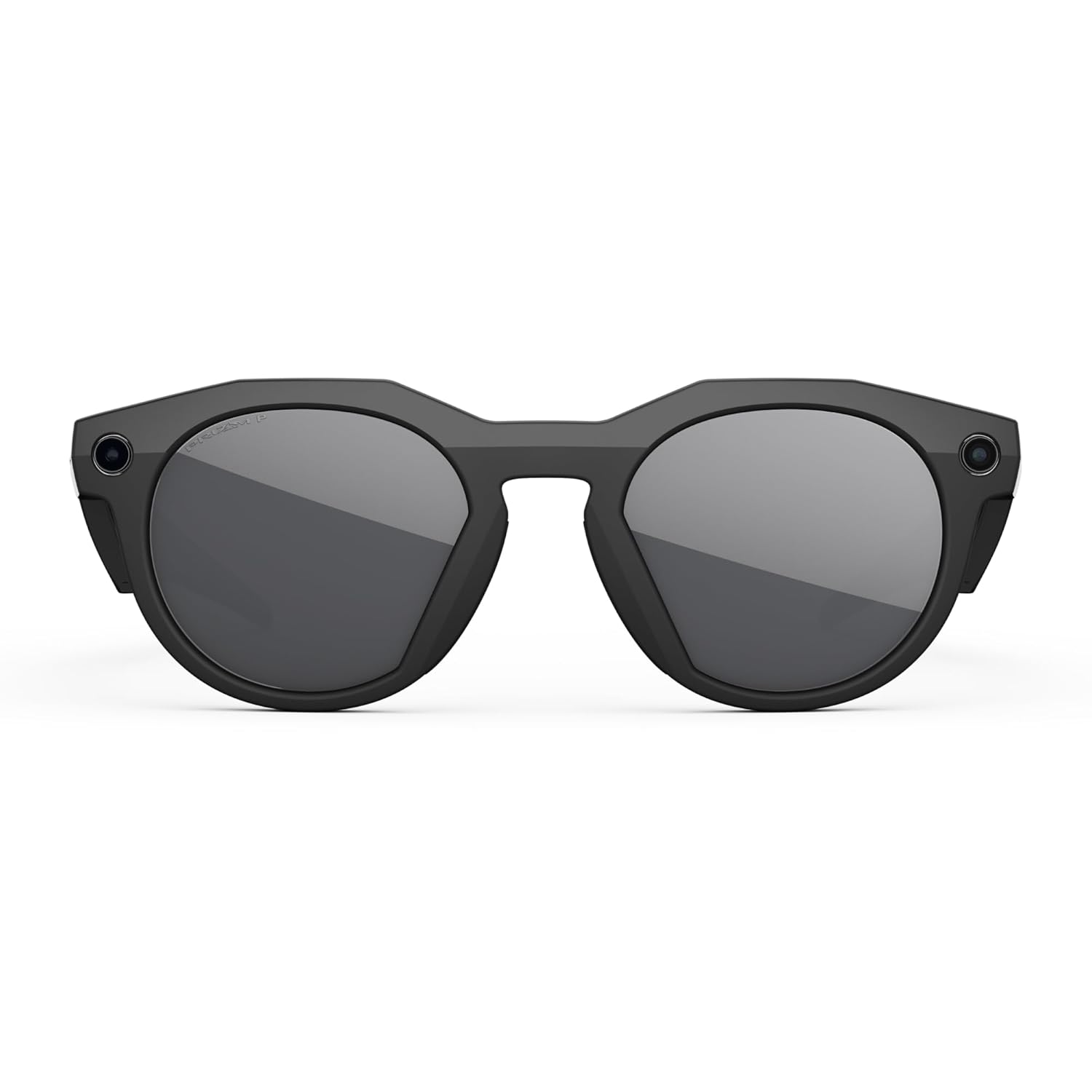
I came across the Oakley Meta HSTN the way most editors find things now: a scroll that stopped. The shield frame silhouette caught me first, because shield sunglasses in this format tend to read either aggressively athletic or quietly futuristic, and this pair managed both at once. The matte black colorway against the titanium frame construction looked like something designed for a velodrome, or possibly a film set where the talent needed to look like they didn’t try. I went deeper into the spec sheet expecting to find something that compromised the optics for the sake of the tech. I didn’t.
What pulled me into actually ordering them was the lens story. Prizm polarization with UV400 protection, hydrophobic coating, scratch resistance. For a pair carrying this much onboard hardware, the lens credentials were serious enough to warrant attention as everyday sunglasses, not just a gadget you wear twice and shelve.
How They Actually Fit
The shield frame sits wider than a traditional sport frame, which is by design. The bridge fit is standard, and if you have a lower nose bridge you’ll want to try them before committing because the frame doesn’t offer adjustable nose pads. The temples have a mild downward curve at the ear that locks the glasses in place without clamping, which matters when you’re moving. At the same time, the extra weight of the integrated camera and speakers is noticeable if you’ve been wearing ultralight optical frames. It’s not uncomfortable, but it’s there.
“These are the rare sport glasses that feel at home in a coffee shop, on a bike path, and behind the wheel.”
The overall silhouette sits slightly forward on the face compared to a traditional wrap, which means a little more airflow, a little less seal. For everyday sunglasses worn around the city or during casual outdoor activity, this is actually a benefit. The lens coverage is generous enough to block peripheral glare without boxing you in. One honest observation: if you wear the glasses pushed up on your head between wears, the temples don’t grip quite as firmly as a lighter frame would because the weight distribution shifts. It’s a minor point, but worth noting. According to the spring 2026 trend report, bold shield frames in performance materials are exactly where the eyewear conversation is heading, so at least the style timing is right.

The Outfits I Actually Wore Them With
Look 1: Tuesday Commute, Full Armor
Black performance quarter-zip, dark slim-fit trousers, and white leather sneakers that were a mistake to wear near puddles. I had a canvas tote over one shoulder and a coffee in my hand, and the Oakley Meta HSTN sat on my face the way good sunglasses do when you forget they’re there. The monochromatic black-on-black of frame against the zip felt considered, not accidental. The shield lens shape widened the silhouette of my face in a way that read more editorial than sporty. I got a compliment before I reached the parking garage. That counts.
Look 2: Saturday Morning Run into Brunch
Running tights, a lightweight half-zip in slate gray, trail shoes. The glasses stayed put through forty minutes of pavement, which is the primary test for any pair worn during actual sport activity. When I walked into the café afterward without changing frames, nobody looked twice because the design reads clean enough to pass outside the athletic context. The polarized lens had already shifted from cutting morning glare on the path to softening the bright window light inside. These made the transition without requiring me to think about it.

Look 3: Driving to the Coast, Windows Down
This was the use case that finally made me understand why the category of sport and driving sunglasses exists as a distinct thing. The mirrored Prizm lenses on ocean-adjacent highway light are remarkable, the kind of remark you make out loud to nobody. I had a linen shirt, worn-in jeans, and the particular freedom that comes from a long drive with a playlist running through glasses instead of car speakers. There’s a version of this where the tech feels gimmicky. This wasn’t that version.
What Other People Are Saying
Across 715 ratings, one buyer described the experience in the first weeks as “living in the future,” a phrase that captures the particular mix of novelty and usefulness this pair delivers when everything is working correctly. The rating distribution tells a story common to smart wearable tech: strong peaks at the top, with some dissatisfied voices in the minority citing software durability concerns over time.
The consensus that emerges from the Oakley Meta HSTN review pool is that the optics and design meet performance expectations consistently. The tech layer is where individual experience varies. That’s not unusual for this category, and it’s worth factoring in if longevity of the smart features is your primary concern.

Who Should Skip Them
If your face runs narrow, the shield frame silhouette will overwhelm your proportions and sit wide past the temples in a way that reads oversized rather than bold. This is a medium-to-wide face shape pair. People who need prescription lenses should also know upfront that this frame is not currently available in Rx options, which is a real gap. And if you’re looking for something minimal enough to wear to a formal dinner or a business meeting, the profile is too sport-forward to carry those settings without feeling slightly off. These are not your everyday sunglasses if your everyday involves a jacket and tie.
Also, anyone who prioritizes completely wire-free passive eyewear, and specifically doesn’t want to think about charging a pair of glasses, will find the eight-hour battery and the associated charging cable a layer of friction they didn’t sign up for.
What They Replace in My Rotation
I had a pair of wraparound sport frames I’d been using for running and weekend drives for a few years. They were solid, the lenses were fine, and they did nothing else. The Oakley Meta HSTN replaced them in the car door pocket and the running bag simultaneously, which collapsed two separate pairs into one. That’s a practical consolidation, not a small one. For a pair worn across sport, driving, and everyday contexts, the value proposition starts to reframe itself once you realize you’re not carrying two or three options anymore.
The old pair is now in a drawer. I don’t miss it. See our editor’s top sunglasses picks across categories if you want to understand where the HSTN fits in the broader landscape of what’s worth wearing right now.

FAQ
What face shapes work best with the shield frame silhouette?
Oval, square, and oblong face shapes carry the wide shield frame most naturally. Narrower or heart-shaped faces may find the frame extends visually too far past the cheekbones, which throws off proportion.
Do the Prizm polarized lenses affect screen visibility?
Polarized lenses can make certain digital screens, particularly LCD panels viewed at specific angles, appear darker or distorted. This is a known characteristic of polarized lenses across all brands, not specific to this frame. The Consumer Reports lens testing overview covers this trade-off in useful detail.
Can I wear these for fishing or water sports?
The Prizm polarized lenses are specifically effective for cutting water surface glare, which makes these a strong candidate for sport fishing sunglasses and on-water use generally. The hydrophobic coating handles spray and moisture well. Just be mindful of submerging the frame given the electronics.
Does the build quality match what you’d expect at this price point?
The titanium frame construction, hinge feel, and lens quality all read above what you’d expect for an accessible sport and tech hybrid. The finish is confident, not hollow. The hardware components feel integrated rather than bolted on. The value reads above what the form factor might suggest at first glance.
What sizing options are available, and what’s the return policy?
The HSTN is offered in a standard fit, which aligns with most medium adult face proportions. Return policies vary by retailer, so confirm purchase terms before ordering, particularly given the electronic components which may affect standard return windows. Check our gift guide for smart eyewear recommendations for more context on where this pair positions against alternatives.

The Verdict
I’ll reach for the Oakley Meta HSTN the next time I’m heading out before sunrise for a long run, and I’ll reach for them again on the highway at noon. I’ll wear them to the farmer’s market on a Saturday without changing frames, and I’ll have my podcast queued before I get to the car. That versatility across sport, driving, and genuine everyday sunglasses territory is the actual story here, not any single feature in isolation. The Prizm lens performance would be enough to recommend these on optics alone. The smart features are genuinely useful when they work, and the camera and audio quality are far better than you’d expect given the form factor. The GQ breakdown of what separates great sunglasses from good ones will tell you that lens quality is non-negotiable. On that metric, these pass. If you’re in the market for the best everyday sport sunglasses for athletes who live in more than one context, this Oakley Meta HSTN review lands in the same place every time I put them back on my face.
For more options across active disciplines, explore our full sport sunglasses category, or browse sibling picks in our sport cycling sunglasses archive and sport running sunglasses collection for frames engineered around specific movement patterns. And if you want to understand where the broader trends in performance eyewear are moving, the Harper’s Bazaar fashion and accessories trend coverage has been tracking the sport-to-street crossover more closely than anyone.
Bottom line: this is the pair you buy when you’re done choosing between style, performance, and technology, and you want to stop making that trade-off at all.
Every Angle
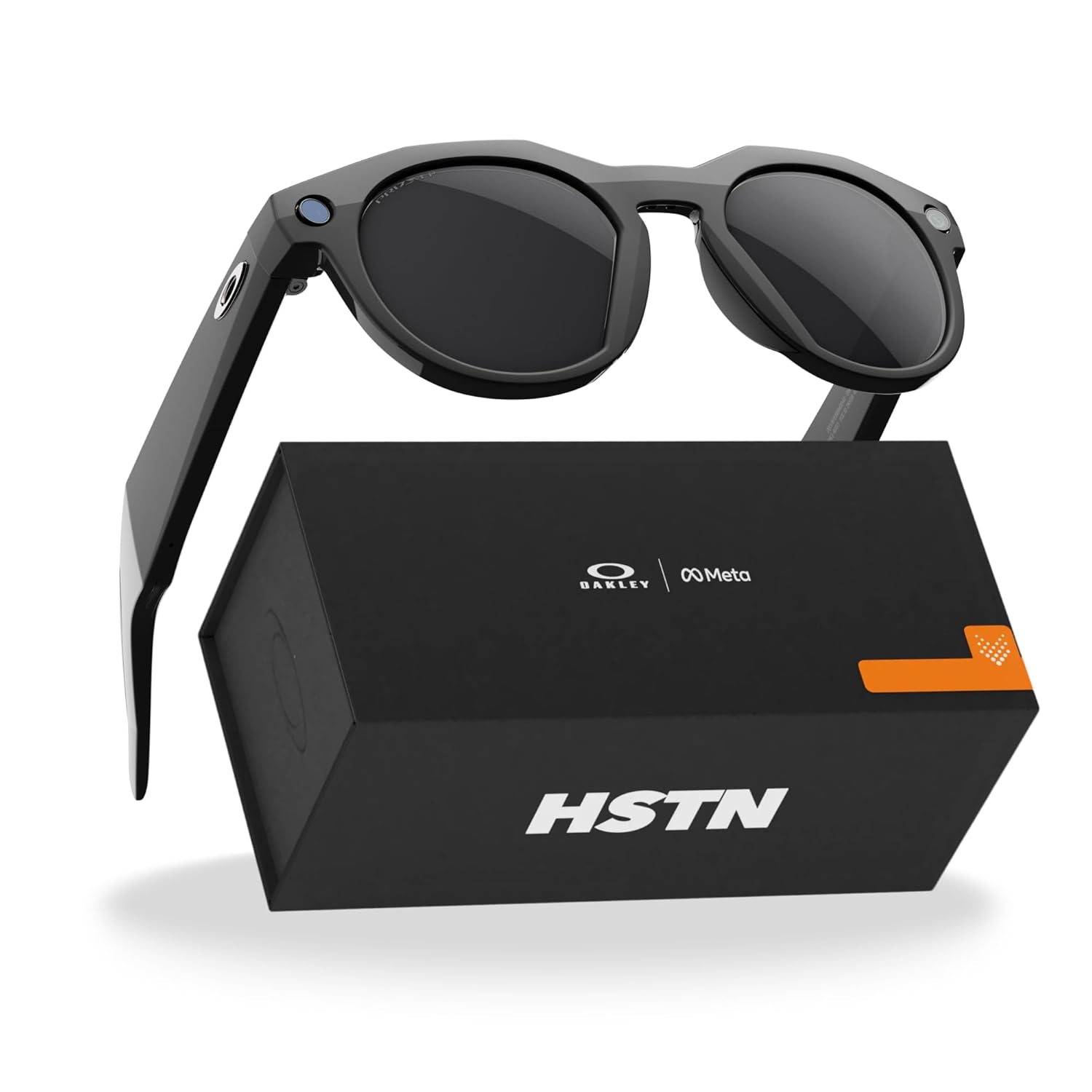
The pair as photographed for Amazon — front, side, back, detail.


As an Amazon Associate I earn from qualifying purchases.